
Getting out of the bathroom in the middle of the afternoon.
The change was always something easy to perceive, because of the air conditioning in the living room. They had a door in the entrance, and you had to pass that to access the rooms. The bathroom was right to the right after entering.
It has a glass door, so you could see people lying down in the sofas or sitting by the wooden tables. So, even before I get to the other side, I was felling differently.
I wouldn’t say that it happens very often, but sometimes it does and I don’t even know how to explain the feeling of “crossing over”.
I always say to myself that “I feel things”.
Like as feeling different vibes, different stares and different energy from “before” ( even 2 min can be considered a before state).
In this scene, when living what I just described, I could finally give it a name:
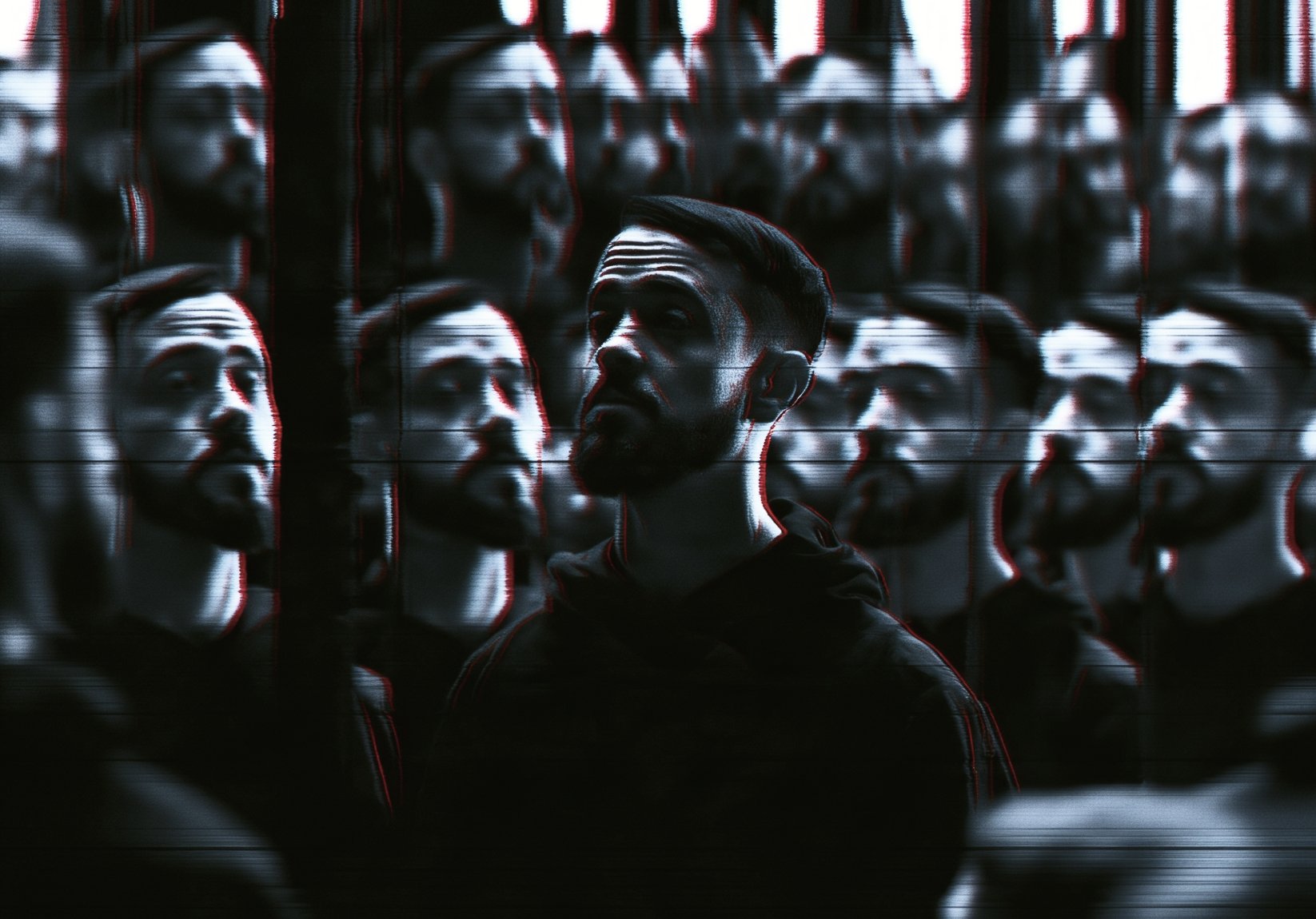
I felt myself entering the Room of Mirrors.
A mood wave forming right in front of my eyes.
The consequence of that is this Letter.
Couple days ago I was meditating and a persistent thought came to my mind. It even stuck with me until for a while:
“If you change the way you’re breathing (the frequency and the intensity), do you become a different person?”
Based on what, right?
Starting to dive deeper here: what’s the definition of a person?
What’s your own definition of yourself as a person?
I was very aware in this meditation, mostly to the relaxation state arms and legs, letting my body recover from the previous day and the previous impressions it was still caring entering that night.
I have a new point of view about dreams: I’m sure they are the mechanism your mind developed to associate and digest the amount of information you’re processing during the day.
Like, they’re the fun part your brain is enjoying which I talked more about that in this previous Letter: “The Illusion of a linear Timeline [1/3]”;
So, waking up to a new day is the same as uploading a new lil package of memory, summarized and prioritizing a lot from the day before to compose the perception you have also about Yourself.
Changing something here, adapting another thing there;
And here we are: Humans, Selfs and… Mirrors.
What’s “yourself”?
Have you noticed that sometimes, when you’re with different people, you act in a different way just because of those people around you?
Have you done this exercise of coming back home and trying to remember some answers, laughings and “excitements” (or not) you had in your voice during those encounters?
Could you identify your “Core Image” of “who are you?” without asking someone else or having other people as reference on how they see you?
In 1902, Charles Cooley, sociologist and professor, coined the concept of “Looking-Glass Self”, which had the following question: “we build our identity entirely on how we imagine other perceive us?”
The same kind of reflection appears in the Buddhist concept of “Anatta” or “non-self”, which is exactly the proposition of “there’s no static ‘I’, only a fluid process of identifying yourself in time, which we mistakenly freeze it into a object/personality”.
I learned for real how to come back to the “right now moment” when I had my experiences of expanding consciousness awareness (yes, lysergic substances like LSD and psilocybin). Probably the most important aspect of living those states is the “ego death”, as people call it in English (I didn’t know until couple days ago; which makes sense somehow).
You can only learn how to navigate states of “non-identity” when you understand the mechanism of coming back to what’s real. Your mind aims so hard to create your own world and build meaning, that sometimes reality becomes only what’s “out of here”; in this case, inside your own mind and your own parameters of how the world really works.
(Take the time to a fast reading on this other Letter “Everything changes on ‘Now Power’”, which you also have a complementary video to reflect about.)
When you’re living in this “state-of-non-presence”, it’s the same as creating a Ghost or the Automatic Pilot, as usually called.
Your energy is moving and being redirected to the exhausted and endlessly loop of creating the same mind patterns, which is call reality.
The most common aspects are:
You perceive yourself through other people lens.
You believe that those lens are your true self.
You let yourself be built by how the external world sees you.
Moreover, this is the perfect environment to nourish what you call “yourself” with what also you call the “traumatic events” of your life.
We often think those are permanent scars, built in on our codes of memory and well beings; but actually, trauma is a trace of the mirrored reflection which you still identify “yourself” with.
And this is, particularly, a very sensitive subject to talk about in my own life.
Even when writing this line alone, I could feel my body reacting to what I recorded.
My feet grew restless in my chair here lol
It’s easy to forget who you truly are when you’re always surrounding yourself with people that are afraid of your real growth.
People
What’s worth it to always have in mind is:
The others (with exceptions) don’t see you as you are. They see you as they want you to be.
No one is a villain in this story tho.
Being aware of this social dynamic “should be” a collective ongoing exercise.
The first time I crossed with this concept, it was like a punch in the face.
I was moving from Chapada dos Veadeiros (Brazil) back to my hometown, Brasília.
Brasília is known (at least by myself) as a city full of projections.
Therefore, it’s a city projected from the top view with all the modern planning and mockup of how a “perfect city” should be. I believe this affects directly how most people identify themselves and others when living there.
At the time I’ve been back to Brasília, I was spending a lot of time with my family again: the same routine as before I left, the same dynamic in the conversations, the same way of dealing with discussions.
Again, there’s no villains in this story.
I felt the pull. The first time I could identify this personality race/fight.
It was like I was dressing an old skin, all over again.
My body was feeling the agitation through the eyes and energy from who was identifying me with a version of myself I didn’t recognize anymore.
And when you’re back, you’re back.. right? I start to compress and fit myself in the same group of friends I used gang out, places I use to go and habits I used to have.
One more time: there’s no villains in this story.
It was the combo of identification.
The other around have their weight on that, but mostly I was the one accepting again the old version.
Most people, if not all, have the mechanism of relating you with the memory they know.
I like to call them the Taxidermists.
The sensation I remember is exactly like that: I was experiencing myself as someone new because of my time living alone. Me and my dog.
It was my time dealing with everything about my life.
My time having the hard conversations with others and myself in my way.
The time I had to think about my behavior, relationships and even my voice’s tone.
Therefore, when I get back, I had to face the challenge of people, who knew me from before, trying to “drag me back”.
(I’m being honest on how I felt at that time)
The hardest thing, and maybe the most empathetic thing, is: people are not conscious about that; they just want to be with you. And they do that in the way they know how to.
They try to stuff you back into the version of you they found comfortable.
To summarize, since the first time I was presented to Jean-Paul Sartre, I identified a lot with some of his psychological concepts. He famously declared:
“Hell is other people.” Not because they are who they are. Because you let yourself comfortable to be in hell with yourself to fit their projections.
He meant that other people constantly try to freeze us into fixed objects (roles, past mistakes) to ease their own existential anxiety. And you accept that for the sake of comfort.
That’s why I categorize most people as Taxidermists; cause the most common behavior in relationships has been to always try to “steal” from you the freedom of change.
The specific necessity of living what’s known by fear of what’s new.
Ego
“Só Freud explica” (That’s one for Freud.)
Sigmund Freud formalized the psychological concept of Ego in 1923:
”The part of the mind that mediates between primal drives and the external world, heavily relying on defense mechanisms to protect the psyche from anxiety and maintain control.”
If you give me a poetic excuse here, I would say:
It’s the illusion of knowing yourself by what’s acceptable (non-traumatic) by society, so you can be left alone with your private craziness.
When talking with AI about this Room of Mirrors’ concept, we came to a very good term which I didn’t know so far: the Lossy Compression Algorithm.
It is the “reduction of file sizes by permanently removing non-essential data and using approximation in the information, based on human perception (in not noticing the data which was lost)”.
Funny… it’s a concept used for computers, and then you can use for humans (again). Check it out, again, in “**The Illusion of a Linear Timeline [MR 1/3]”** how I explore this concept of compression;
If the Ego is formed based on the essential information gathered to interact with the external world, we can conclude that the Ego is the summary of what your brain is saving day after the day, as the default OS (operational system) of your being.
What’s helping you in not being harmed, stays.
Your Ego can be seen as the compressed part of yourself from what “worked” to have a functional interaction with the external world, but >>
It’s not the only part of you;
It can change depending on the external world you’re in interaction with;
It manifests often accordingly with what you need to express to protect yourself;
It’s not. the. only. part. of you.
Its job is to take the terrifying, infinite flow of your unconsciousness harvest, bring what’s important for your survival to consciousness and freeze it into a labeled, manageable file size: a static identity.
It’s all about safety and the need of dealing with what’s known: for yourself likewise for other people, it’s about what’s the definition of “yourself” in the world.
But once more, no one is the villain in this story. Not even your Ego.
This is a complex mechanism of balancing what’s worth it to change and what cannot be messed with. Imagine:
How much daily energy you would have to spend/invest to rebuild your own perception (OS) of who are yourselfeveryday while, let’s say, you’re brushing your teeth?
Like a Macbook having to build the whole Operational System everyday just to buzz the alarm.
The ego wants this map because maps, in general, feel safe.
Flow feels like death for the Ego, and this creates a state of high entropy: chaos, fear, and stagnation which has born from investing energy to defend a rigid mask.
(the Ego is not a good energy manager in the end).
However, it’s just high entropy when you don’t allow Flow to be your default state.
To do that, it’s an exercise of more than one lifetime, I assume.
I also explore more about Entropy in the way society organizes itself in “**Decentralisland: The World is holding on”.**
Nowadays, most “spiritual” people say that the Ego should be conquered or dissolved… Crazy people.
Your Ego is your best friend to be playing this earthly game.
The problem is identity yourself with the Character (Ego) you’re playing the game.
The Room of Mirrors is a metaphor consisting in giving this power away.
The power of choosing your Character.
You give away when you accept other people dictating how you should manifest your own Self in the Game of Life.
Detachment
Everyone is trying to be comfortable, tho.
Sometimes this comfort comes out of fear. Like fear of change, fear from the New, fear of facing what’s not known… and if so, the uncomfortable becomes the growth mechanism to nurture your Ego, in the “right” way.
There’s no better way to check your Ego with reality and to bring even more contrast to it than putting it in the lights of uncertainty. It’s basically the parallel you you put yourself on so you can see more clearly.

I’m traveling for 1 year now and this amount of time hits harder whenI stop to think about it. In the beginning I had the sensation of “just one more day”.
In the end, you always want to get somewhere that feels like home; you want to have everything that you know around you, in a comfortable way to experience the new (a lot of contradiction, right?). Feeling comfortable makes you feel like you belong to something or somewhere.
However, by traveling around for so long, one of the first questions raised was:
What’s home?
Not everyone had the same definition of home when growing up. Some had a very disconnected experience about a placeto call home, others were always living in the same house and very close to their parents for the whole childhood: doing the same things and having the same routine for probably 20 years, until reaching adulthood.
Me, myself, tho, didn’t think about Home when I was growing up. Why?
I just don’t record of having this sensation of a place to call mine.
Maybe because I remember the movings I had around in Brazil;
Maybe because I’ve studied in different schools during my life;
But, one of the things I remember the most about what I know as home: the laundry all made by my mother, ready and fragrant on my bed.
I’ve just noticed that, the 1st time I came back to my parent’s house after living alone when I was 18.
In general, that is exactly the point from where the question arises: what’s home?
If you are in constant change and mutation about who you are and what you think, and the places and people you used to know are also facing the same process, how coming back to somewhere or something could give you the sensation of coming back Home?
Cause, if the sensation of Home is a different sensation to everyone, what’s this pull we feel (and I was feeling) to come back (????) every time we’re away?
Come back to what? To where?
Other people impressions and validations.
Your first home is the Ego and Personality you’ve been nourishing for so long, and having the help of other people whose experience life with you.
We get used to be and see ourselves from the lens of what other people expect us to be.
We want to go back to what’s known and talk about the experience we had “abroad” (and I’m not talking here specifically about traveling).
We want to be validated as someone who have changed, by the ones that have defined us as being something else for so long in our lives.
Funny, isn’t it?
Even our transformations have to be assured by the external world to feel like being real.
Consequently, when you get to the point of understanding what are those things that defined you the most during your whole life, you start to realize, from inside out, that a lot of those same things were never chosen by you (if not all of them).
That’s why the most important aspect to step out from the Room of Mirrors:
Detachment.
And I have to say: “To detach” can be considered as a natural law.
However, you still can think about detachment as having that bad connotation related to abandoning everything or throwing it all to the wind; but I’m not talking about that.
There’s absolutely nothing to do with distancing yourself and starting to act all cold with others in your life.
As everything is this world and reality, detachment is also functioning by the paradox of duality: at the same time some will see it as distance, you can also identify it with proximity.
How so?
I want to bring the definition of Detachment from now on while reading this Letter (and beyond) as:
Being one of the highest form of behaving with intimacy and respect to all the people around you.
Because:
If you’re not attached to any history towards someone, you can truly meet the one being presented to you at a specific moment.
Even the ones you “already now”, you see?
In another words, detachment is understanding, for example, that your reference of what’s home can change from a place to a group of people;
at the same time, can also change from a group of people to an idea;
and from an idea to a inner world perception;
to, finally, move from an inner world perception to the awareness of what’s happening right in this moment in your life.
It all depends on the reference on what you identify your personality with and the amount of layers you can see through.
Furthermore, here is where it all starts to become very interesting:
The moment you can mirror that inner understanding and self-awareness to what you hold yourself, as a “point of support” of your Identification, is the moment you can truly met the people whose cross your life along the way.
You see clearly that other people also can change the place they call home, being that a place, an idea, other people or even their own perception about themselves.
Hence, they can change the “home” where their personality and Ego lives.
And you, can “allow” them to do that or not.
This is actually the best way to identify the Taxidermists and to not be one of them yourself. By detaching and giving the opportunity for others to change, specially, in the way you perceive them.
“Toma lá, dá cá”.
The Bhagavad Gita is a sacred 700-verse Hindu scripture, which is a synthesis of various strands of Indian religious thought.
Can be translate from Sanskrit as the “Song of the Lord”.
There, we have something that echoes that thought:
It teaches that “true freedom comes from engaging fully in the action of the present moment while completely detaching from the fruits or past identities associated with it”.
*“tyaktvā karma-phalāsaṅgaṁ nitya-tṛipto nirāśhrayaḥkarmaṇyabhipravṛitto ’pi naiva kiñchit karoti saḥ.”
(”Having abandoned attachment to the fruits of action, ever content and dependent on nothing, though engaged fully in activity, he does not do anything at all (remains untethered and free”).— Bhagavad Gita, Chapter 4, Verse 20*
That is the perfect definition to where I want to point as detachment: be fully present.
By that, we can be even more respectful with the existence and choices of others when interacting with them 1, 2 or 3 times, again and again.
Always allowing their existence and transformation to talk louder than our Ego’s need to “know everything” upfront.
— Black dots
I have this metaphor for a while in my life. I’ve been also thinking about that metaphor deeply in this journey of understanding myself; with all the traveling and the natural predisposition I have to that.
Sometimes is easier for me to “name the bulls”, so I can understand better how to deal with them.
You can check it out here in “**Clean up your Field. The Filter matters [BC 1/2]*”*** how I conceptualize what I visualize as The Bubble, cause is gonna make a lot of sense to what follows.
Not just mine, but everyone Bubble is filled with black dots. What varies on being aware of that is the attention each one of us is given to their owns.
What I usually say about the black dots is that they’re the somatic energetic outcome where trauma and past narratives have condensed into stuck matter.
They’re what maintains your Ego. The most strong foundations where your personality keeps coming back to recognize itself.
Their mission is to be stuck with you, simple. They “weigh” your being to not change or perceive a different way to express your personality
Also, they’re responsible to create the hologram of your static identity.
Almost like Ego’s Agents.
In general, a very good exercise to be more accurate on how to visualize those black dots is to apply Tom Campbell’s Entropy framework (He is basically the patron of Escape Television™), and Observe (actively acting in the realm of the 2º Archetype, the Magician) what daily increase your Entropy and how can you get better in the usage of your productive energy.
Why the dots are so important? They manifest themselves when you’re bursting the bubble. They’re Ego’s Agents but also the most important clue on where you should be looking to, observing and healing.
If we give too much energy to the Character, we’ll not be able to nourish other important aspects of our entire lives. It’s important to take care on how to manifest your being but at the same time remembering you’re not the Character.
The game is simple: use the Character to perform into the parts and situations it is necessary, but turn your attention back to the Player every now and then, if not often.
Carl Jung (one of my best dead friends) called this Character as the “Persona” (Latin for actor’s mask).
He warned that psychological illness occurs when we identify with the Persona.
Health is realizing that the Persona is merely a tool for navigating society while the true Self remains free behind it.
In the end, the black dots are the mechanism of support for that Persona at the same time they’re the clues of what’s holding your being in a static identity.
The Gardeners
Consequently, to “deal” with the Black Dots is not to deny them or interpret their existence as harmful… the goal is to “undensify” them in a way that you know their existence and, also, their role in your own complex existence.
It’s to exist in the Mirror, understanding that the Mirror exists.
How?
I would start by focusing on a “Daily Entropy Audit” (what a fkng name is that?? lol)
Basically, when I feel heavy or pressured, I know that my energy is flowing out of myself in a dysfunctional way. Most of the times, to maintain an appearance; and I know you know that feeling.
So, this Entropy Audit would be the simple exercise of diminishing the gap of how you see and know yourself and the way you’re acting in specific situations/group of people.

Another thing I really like to use as a tool is identifying what I call “The second Encounter”.
Taxidermists will always try to frame you as they’ve been always known you:
- They’re too afraid of recognizing change in their lives.
- Your reflected image in their minds is part of their lives.
- By not changing how they see you, they do not face change in their lives.
And I truly believe we all have this sensation of being, somehow, wronged by some of those “clothes” other people insist on projecting onto us.
On the other side, I would like to introduce the second kind of people here, which act in a opposite way form the Taxidermists:
The Gardeners.
That’s why I said before that “the Second Encounter” could be used as a tool.
You can identify The Gardeners, when in a Second Encounter, as the people who when you return to their lives (even with not so much time, like a distance of days apart), they’re excited to meet you again and to see you as someone able to be in a constant transformation.
Meaning: they give you the space to be growing and blooming.
A very good hack to perceive that, is:
The Taxidermists will always say “Do you remember how we use to be” or “You’re nothing like that, I know you”.
On the other hand, The Gardeners will be a little bit more subtle…
They will give you space to talk;
They’ll give you attention and demonstrate that with their eyes, looking at you;
They’ll make questions and really listen to your new perspectives;
They’ll give you space to grow and nourish who you became and enjoy who you’re right now.
Those people given you freedom and power to refine the way you see yourself.
You’ll have even more space, peaceful space, to realize the things you want to hold about yourself and your personality.
Not out of pressure or projection fulfillment; but out of nourishment.
As a result, you’ll be also able to detach from what does not serve you anymore, “undensifying” the black dots and nourishing a version of yourself that Mirrors better who you are, and who you’re becoming.
You’ll be able to lean on the “Observer Stance” to maintain consistency, without believing the mask is the Operating System.
The Gardeners help you to grow, by just giving you the right environment and the right nutrients.
They’re not gonna try to define your seed or the kind of fruit your tree should give.
Of course, this whole dynamic works just for people crafting theirselves and searching the refinement of their soul. But I believe I don’t even need to say that here.
I am not the Pattern
Again from the Vedas, In Advaita Vedanta, the realization of the “Sakshi” (The Witness) is perceiving yourself not as the thoughts, the body, or the trauma in your mind; but something else…
It’s understanding that you are the silent and the eternal observer watching them happening randomly.
You’re the space in between the (usual) Pattern.
Beyond how people perceive and remember you.
Beyond the societal masks you perform.
Beyond what you accepted as your own personality.
Also beyond what you believe as yourself based on the feedback of what was acceptable to your environment.
When you clear the cache of your consciousness, the energy you once used to defend your Ego and statize your Identity, starts to become pure, productive and available for Creation.
Your Bubble becomes little by little more transparent and permeable.
Light passes through as a wave, being able to reflect itself in Clean Mirrors.
The Mirrors from this Room are not anymore experienced as a prison.
They become your tools to understand yourself better and to reflect who you really are.
You still have the Character; however now it’s being seen as a temporary modulation of a specific feedback wave; some waves need different kinds of boards.
Surrounding yourself with Gardeners Mirrors will also help you to have better reflection as well as healthy branches, allowing you to grow and being nourished to improve.
Therefore, tho, you’re not holding yourself in those reflections anymore…